
|
 |
 |
 | |
|
Probably not. An interventional pain management physician, who understands your condition and knows all the possible treatment options for your condition, should evaluate you. There are usually numerous non-surgical treatments available to alleviate your pain. |
| Pain management physicians, also known as interventional pain physicians, diagnose and treat people who have pain in the necks, backs, and legs. |
| After medical school, the physician completes an additional training during a period called "residency." The doctor may complete a residency in anesthesiology, neurology, physical medicine and rehabilitation, or psychiatry. Afterwards, the physician completes two additional years of a specialized training in pain management. |
| There are several organizations that provide pain management certifications. The most rigorous board certification is from the ABIPP, the American Board of Interventional Pain Physicians. Other certifications include becoming a Fellow of the World Institute of Pain and the American Academy of Pain Medicine (AAPM). The physician should also attain board certification in her/his in their underlying specialty. Fellowship trained doctors can also receive added qualifications in pain management via their own specialty society.
As in all specialties, pain physicians are continually taking courses to maintain the license and to learn the newest techniques and protocols. |
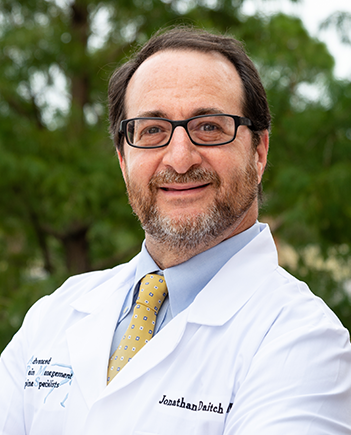
| Both of our physicians, Dr. Jonathan Daitch and Dr. Michael Frey, are board certified in their respective specialties: anesthesiology, physical medicine and rehabilitative medicine. |
|
| |
|
| |